1. Understanding Sustainable Waste Management
Growing businesses produce different types of waste through daily operations, manufacturing, offices, and commercial activities. Sustainable waste management helps businesses collect, sort, treat, recycle, and dispose of waste in a responsible way. A proper waste management system can reduce unnecessary waste while supporting cleaner and safer workplaces. Businesses can also work with an environmental consultancy to understand suitable waste-management practices for their operations.
2. Reduce Waste at the Source
One of the most effective ways to manage waste is to reduce it before it is created. Businesses can review their use of packaging, paper, plastics, raw materials, and other resources. Waste reduction can help lower disposal requirements and improve operational efficiency. Simple steps such as digital documentation, reusable materials, better inventory planning, and responsible purchasing can support sustainable business practices.
3. Recycling and Responsible Disposal
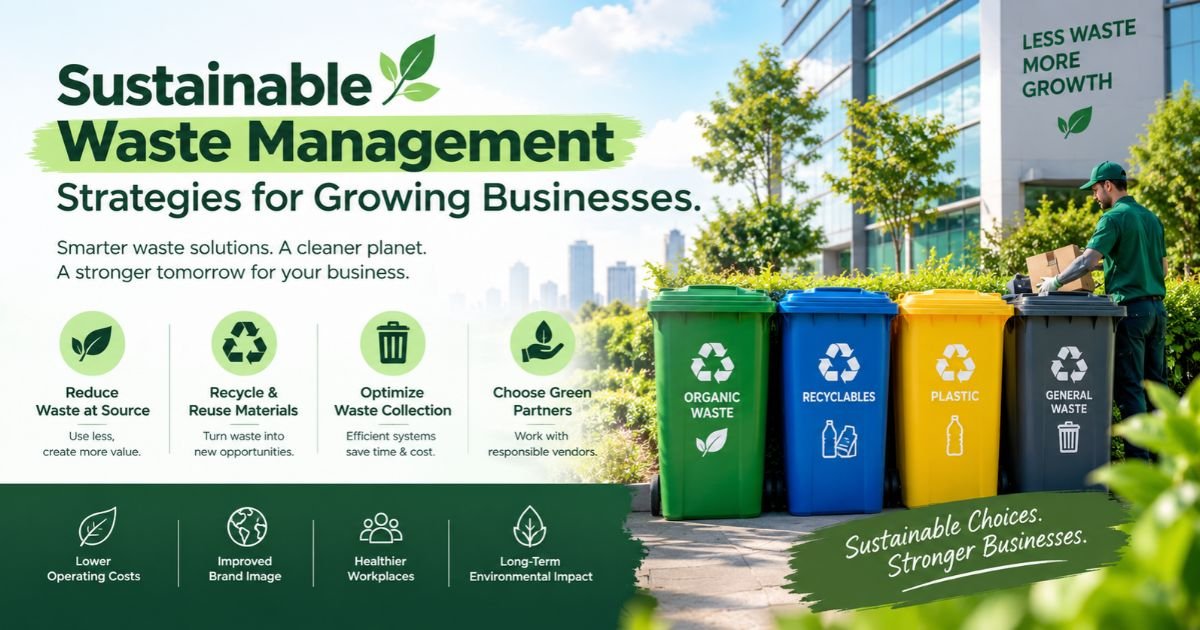
After reducing waste, businesses should focus on proper waste segregation and recycling. Different waste streams should be separated so that recyclable, organic, hazardous, and general waste can be handled correctly. Recycling solutions can help recover useful materials and reduce the amount of waste sent for final disposal. For hazardous or regulated waste, businesses should follow applicable environmental requirements and use appropriate authorized waste-management channels.
4. Building a Long-Term Waste Management Plan
A growing business needs a waste-management plan that can expand with its operations. Regular waste audits, employee training, proper storage, documentation, and monitoring can make waste management practices more effective. Businesses can also explore environmental management services to identify improvement areas and support compliance. A well-planned approach can help companies manage waste responsibly while working toward long-term environmental sustainability.