
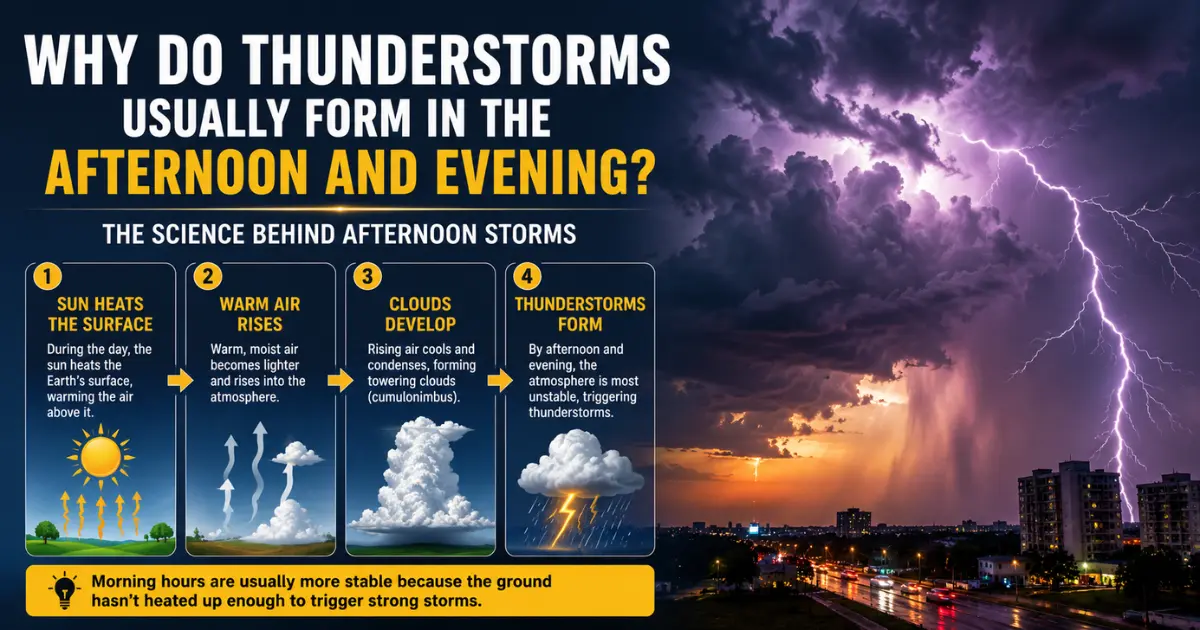
The Science Behind Afternoon Storms
Many people wonder why thunderstorms and strong winds are more common during the afternoon and evening rather than early in the morning. The answer lies in how the sun heats the Earth’s surface throughout the day. As temperatures rise, warm air begins to move upward, creating conditions that favor cloud formation and storm development.
Heat Energy Fuels Storm Formation
During the morning hours, the ground has not absorbed enough heat to generate significant atmospheric instability. By afternoon, solar heating reaches its peak, causing warm, moist air to rise rapidly. This upward movement can lead to the formation of towering thunderclouds, which often produce lightning, heavy rain, and gusty winds.
Atmospheric Instability Peaks Later in the Day
Thunderstorms require unstable atmospheric conditions to develop. These conditions become stronger as the day progresses and the contrast between warm surface air and cooler air aloft increases. As a result, storm activity is far more likely during the late afternoon and evening when instability is at its highest.
Why Morning Thunderstorms Are Less Common
Morning thunderstorms can occur, but they are generally less frequent because the atmosphere is usually more stable after the cooler nighttime temperatures. Without sufficient heating from the sun, the energy needed to trigger powerful storm systems is often lacking. This is why most thunderstorms tend to develop later in the day rather than shortly after sunrise.