
1. What Are Green Buildings?
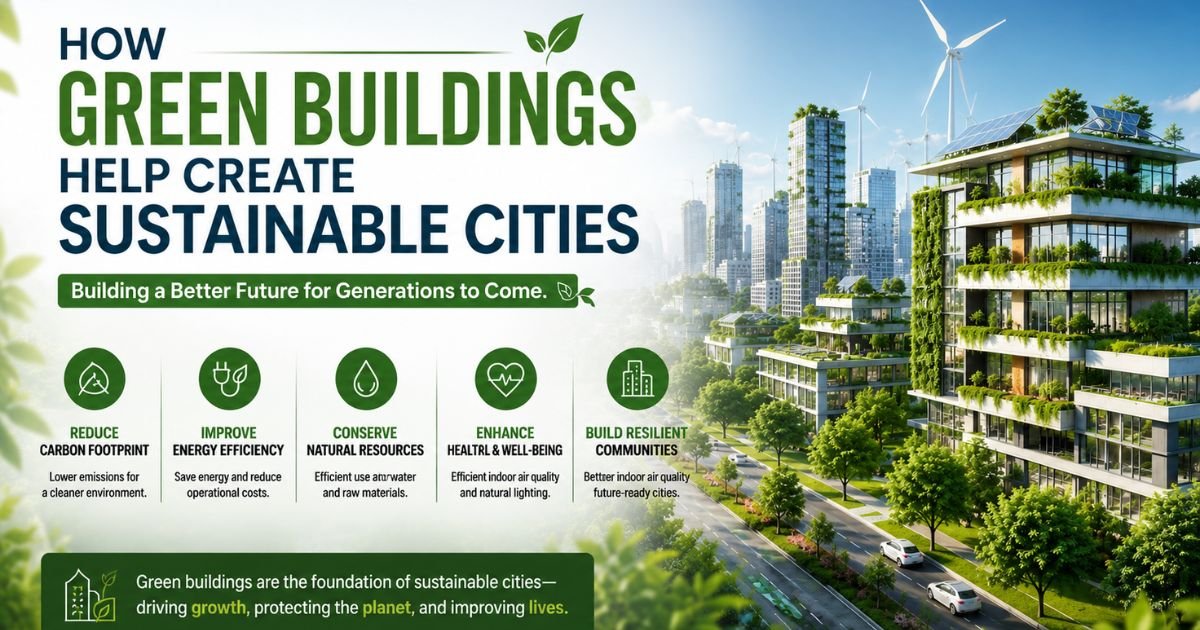
Green buildings are designed to use energy, water, and other resources more efficiently. They often include energy-saving lighting, natural ventilation, water-saving systems, and eco-friendly materials. Sustainable buildings can reduce environmental impact while creating healthier and more comfortable spaces for people living and working in cities.
2. Reducing Energy and Water Use
One of the main benefits of green building design is lower energy and water consumption. Solar panels, energy-efficient equipment, rainwater harvesting, and smart water systems can help reduce resource use. These practices can also lower operating costs and support sustainable development in growing urban areas.
3. Improving Urban Environmental Quality
As cities grow, pollution, waste, and high energy consumption can become major challenges. Green buildings can help address these issues through better waste management, efficient energy use, and environmentally friendly construction methods. More eco-friendly buildings can contribute to cleaner surroundings and help cities create a healthier urban environment.
4. Supporting Sustainable Cities
Green buildings are an important part of creating sustainable cities for the future. When combined with green spaces, public transport, renewable energy, and responsible waste management, they can help cities use resources more wisely. Investing in green infrastructure can support long-term environmental protection while improving the quality of urban life.