
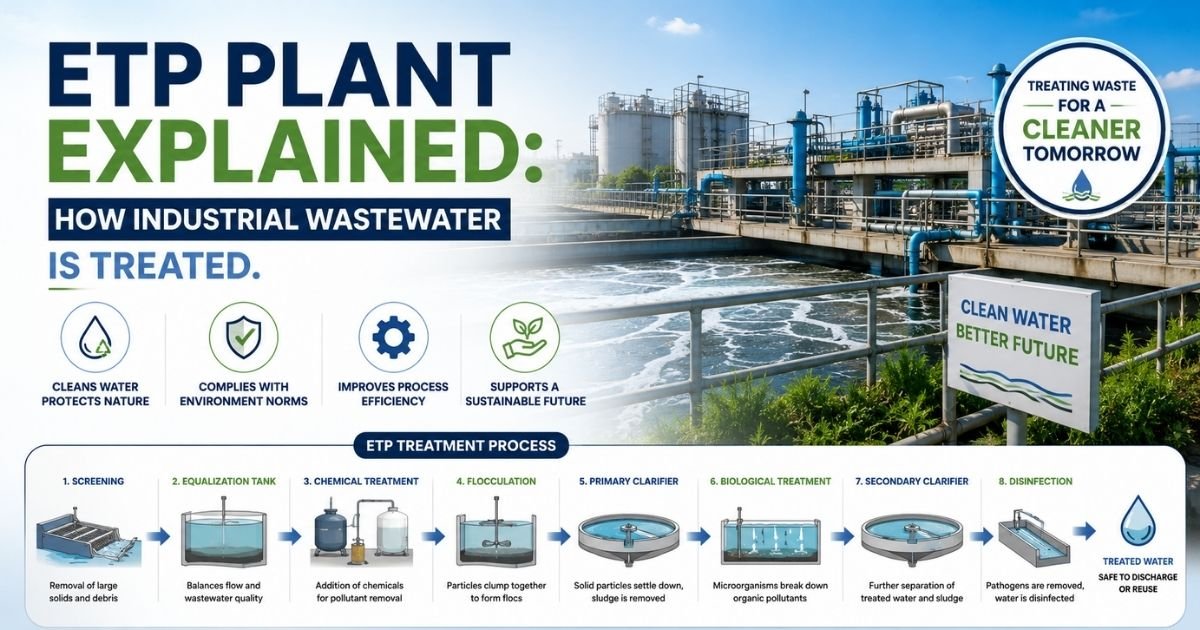
What Is an ETP Plant?
An ETP (Effluent Treatment Plant) is a system used to treat industrial wastewater before it is discharged or reused. Factories and industries produce wastewater that may contain chemicals, oil, solids and other pollutants. An ETP plant helps remove these harmful substances and makes the water safer for further use or disposal.
How Does an ETP Plant Work?
The ETP process usually starts with screening, where large solid materials are removed from wastewater. The water then goes through different treatment stages, including chemical treatment, biological treatment and clarification. These stages reduce pollutants, suspended solids and other unwanted materials from the industrial effluent.
Chemical and Biological Treatment
During chemical treatment, specific chemicals can be added to help separate or neutralize pollutants. The wastewater may then enter a biological treatment system, where microorganisms help break down organic matter. After this, clarification and filtration remove remaining solids and impurities from the treated water.
Why Is ETP Important?
An ETP plant is important for wastewater management, water pollution control and environmental protection. Proper effluent treatment can help industries meet applicable discharge standards and, where suitable, reuse treated water. Modern industrial water treatment systems also support better water conservation and more sustainable industrial operations.