1. Technology Will Reshape Environmental Services
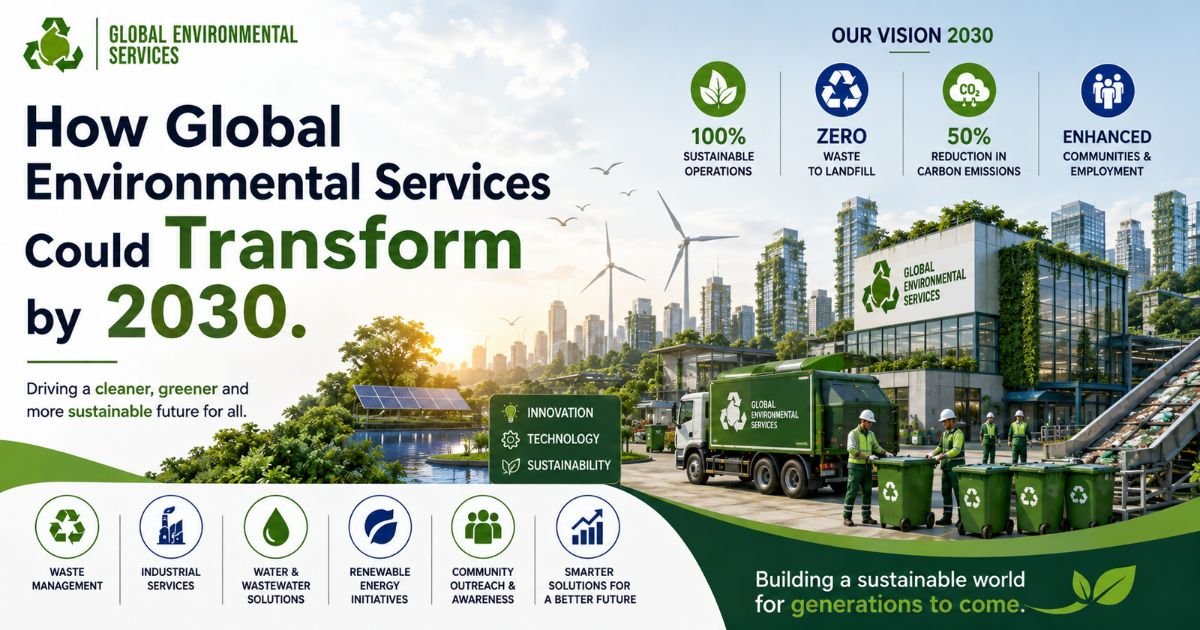
By 2030, global environmental services could become more technology-driven, with companies using AI, automation, sensors and data analytics to manage environmental challenges. Smart monitoring systems can help track waste, emissions, water use and resource consumption more efficiently. These technologies could make environmental management faster, more accurate and easier to monitor.
2. Smarter Waste Management and Recycling
Waste management is likely to remain a major focus as cities and industries look for better ways to handle growing waste volumes. Recycling services, waste collection, resource recovery and circular economy solutions could become more advanced by 2030. Businesses may increasingly adopt systems that separate, reuse and recover valuable materials instead of sending large amounts of waste to landfills.
3. Businesses Will Focus More on Sustainability
Environmental responsibility could become a bigger part of business planning over the coming years. Companies may invest more in sustainable solutions, carbon management, environmental compliance, renewable energy and green operations. Professional environmental service providers can help businesses measure their environmental impact and develop practical strategies to reduce resource use and emissions.
4. The Shift Toward a Circular and Greener Economy
The environmental services industry could play an important role in the global move toward a circular economy. Instead of following a simple make-use-dispose model, industries may focus more on reuse, repair, recycling and resource recovery. By 2030, stronger environmental awareness, changing regulations and new technologies could create greater demand for innovative green solutions and sustainable resource management.