
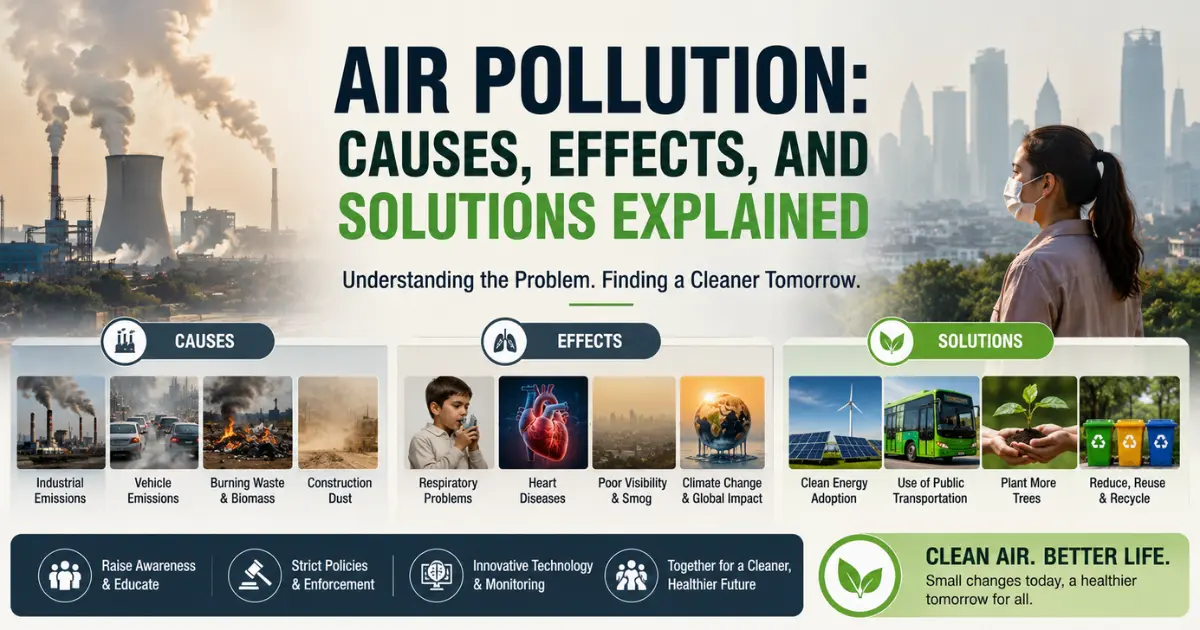
Air Pollution: Causes and Solutions
Air pollution is one of the most serious environmental problems of today’s world. It not only harms the environment but also affects human health, animals, and the entire ecosystem. Clean air is a basic necessity for life, but due to rapid industrialization and urbanization, the quality of air is continuously degrading.
Main Causes of Air Pollution
Air pollution is caused by both natural factors and human activities, but human activities are the major contributors.
1. Industrial Emissions
Factories and industries release large amounts of smoke and harmful gases like carbon monoxide, sulfur dioxide, and other toxic chemicals into the air. These emissions significantly reduce air quality.
2. Vehicle Exhaust
Vehicles such as cars, buses, trucks, and motorcycles emit harmful gases. In urban areas with heavy traffic, this becomes one of the biggest sources of air pollution.
3. Construction Activities
Construction work generates a large amount of dust and particulate matter that mixes with the air and causes breathing problems and respiratory diseases.
4. Burning of Fossil Fuels
The burning of coal, petrol, and diesel releases dangerous gases into the atmosphere. This not only pollutes the air but also contributes to global warming.
5. Burning of Waste and Crop Residue
Open burning of garbage and agricultural residue (like stubble burning) releases thick smoke and toxic pollutants, especially in rural and agricultural regions.
Solutions to Air Pollution
Although air pollution cannot be completely eliminated, it can be significantly reduced with proper measures.
1. Use of Public Transport
Using public transport such as buses, metro, or carpooling reduces the number of private vehicles on the road and lowers emissions.
2. Use of Renewable Energy
Shifting to renewable energy sources like solar and wind power helps reduce dependency on fossil fuels and decreases pollution.
3. Tree Plantation
Trees absorb carbon dioxide and release oxygen. Increasing green cover through plantation drives can greatly improve air quality.
4. Strict Industrial Regulations
Governments should enforce strict environmental laws so that industries use pollution-control technologies.
5. Better Waste Management
Instead of burning waste, it should be properly recycled and disposed of using scientific methods.
6. Public Awareness
Educating people about environmental protection and encouraging eco-friendly habits is essential for long-term improvement.
Conclusion
Air pollution is a global issue that affects everyone. It cannot be solved by governments alone; individuals must also take responsibility. Small actions like using public transport, planting trees, and reducing waste burning can make a big difference. Clean air is essential for a healthy life, and protecting it is our shared responsibility for future generations.