
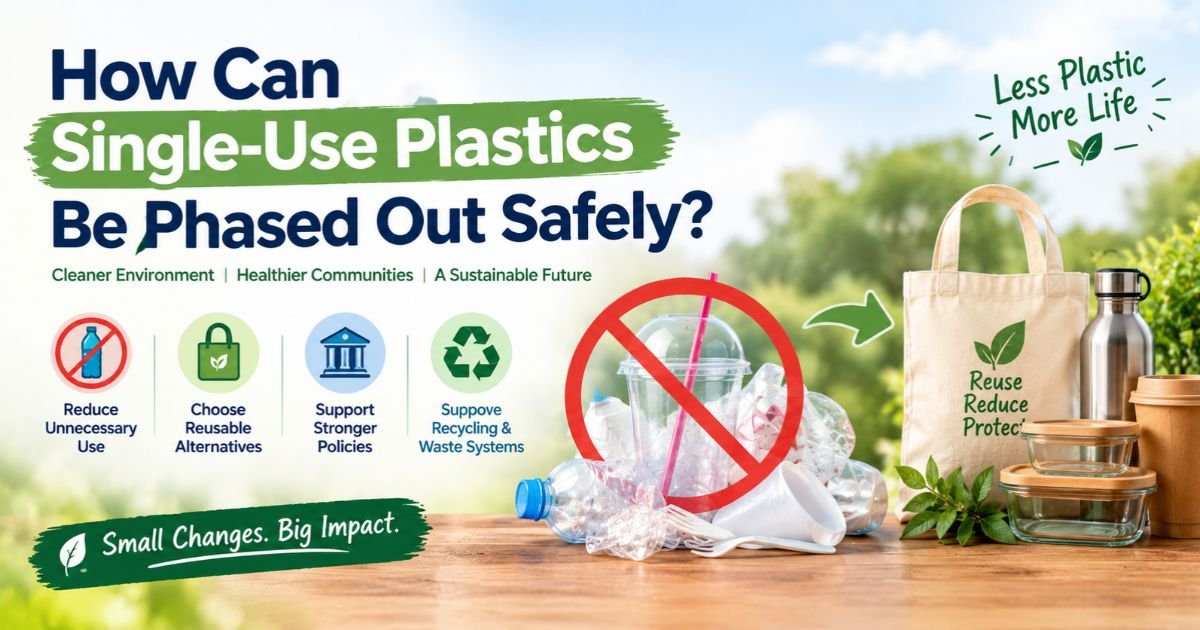
1. Understanding the Need to Reduce Single-Use Plastics
Single-use plastics are products designed to be used once and then thrown away, such as plastic bags, straws, cups, and food packaging. These products create plastic pollution, harm wildlife, and contribute to environmental damage. Phasing out single-use plastics safely requires practical alternatives that protect the environment without creating new problems. Governments, businesses, and consumers can work together to reduce plastic waste and encourage sustainable living.
2. Replacing Single-Use Plastics with Safer Alternatives
One of the most effective ways to reduce single-use plastic waste is to replace disposable products with reusable or environmentally suitable alternatives. Cloth bags, stainless steel bottles, reusable food containers, and paper-based packaging can help reduce plastic consumption when used appropriately. However, alternatives should be selected carefully because their environmental impact depends on how they are produced, transported, used, and disposed of. Choosing durable products and reusing them whenever possible can support more sustainable waste management.
3. The Role of Governments and Businesses
Governments can help phase out single-use plastics through clear regulations, public awareness campaigns, better waste collection systems, and support for sustainable packaging solutions. Businesses can reduce plastic packaging, offer refill options, and redesign products to make them easier to reuse or recycle. A gradual transition is important because small businesses, manufacturers, and workers may need time to adopt new materials and processes. Strong planning and financial support can make plastic reduction more practical, affordable, and effective.
4. Conclusion: Building a Plastic-Free Future Safely
Phasing out single-use plastics safely requires more than simply banning disposable products. It involves reducing unnecessary plastic use, promoting reusable alternatives, improving recycling facilities, and educating people about responsible consumption. Consumers can contribute by carrying reusable bags, avoiding unnecessary packaging, and separating waste correctly. By combining effective government policies, responsible business practices, and individual action, communities can reduce plastic pollution and move towards a cleaner and more sustainable future.