Wastewater treatment is an essential process that removes pollutants from used water before it is released into the environment or reused for suitable purposes. Whether wastewater comes from homes, commercial buildings or industries, proper treatment helps protect public health, conserve water resources and reduce environmental pollution.
Although treatment methods vary depending on the wastewater quality and intended use, the process can be explained through seven common steps.
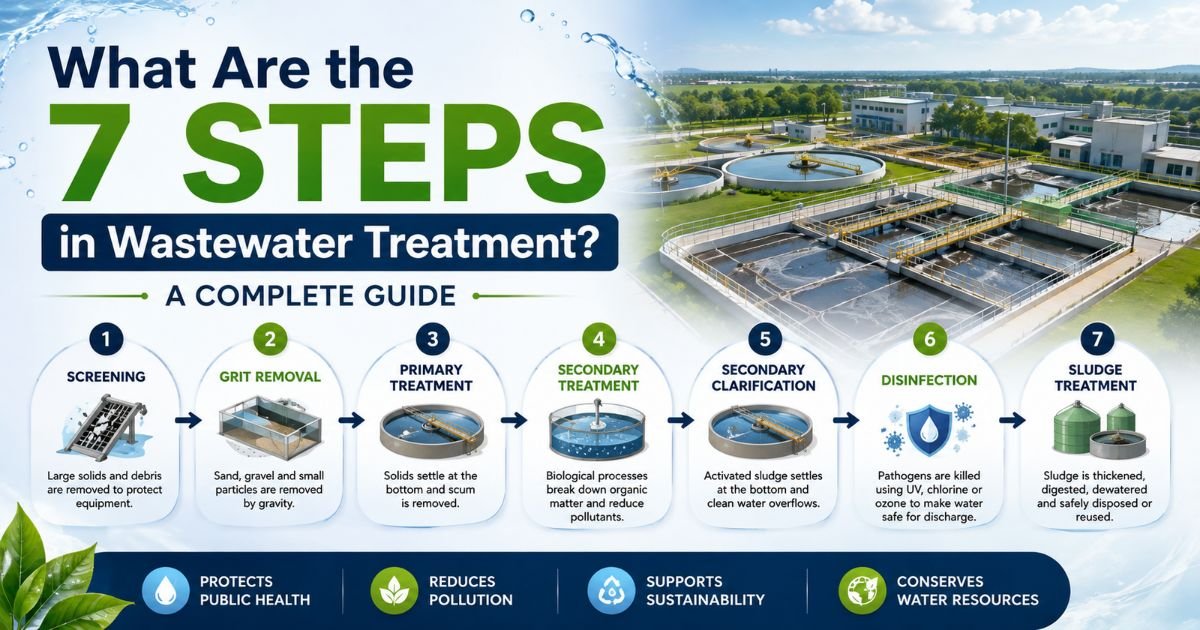
1. Screening and Preliminary Treatment
The first step in wastewater treatment involves removing large objects such as plastic waste, cloth, paper and other debris. Screens prevent blockages and protect pumps and other equipment from damage. Sand, grit and small stones may also be removed at this stage.
2. Primary Sedimentation
Wastewater enters a settling tank where its flow slows down. Heavier suspended solids settle at the bottom, while oil, grease and other floating materials can be removed from the surface. The collected solids are known as primary sludge.
3. Biological Treatment
During biological treatment, microorganisms break down biodegradable organic matter present in wastewater. Processes such as activated sludge and biological filters are commonly used to reduce organic pollution and improve water quality.
4. Secondary Clarification
After biological treatment, the water flows into a settling tank where biological solids separate from the treated water. Some of the settled biomass may be returned to the biological treatment system, while excess sludge is removed for further processing.
5. Tertiary or Advanced Treatment
Depending on the required water quality, additional treatment may be needed to remove fine suspended particles, nutrients such as nitrogen and phosphorus, or other specific contaminants. Filtration and specialised treatment methods may be used at this stage.
6. Disinfection
Disinfection reduces disease-causing microorganisms that may remain after earlier treatment stages. Common methods include chlorine, ultraviolet light and ozone. The appropriate method depends on the plant design, water quality and intended discharge or reuse.
7. Sludge Treatment and Safe Disposal or Reuse
Sludge collected during treatment contains water, organic matter and other solids. It may undergo thickening, digestion and dewatering to reduce its volume and improve handling. Depending on its quality and applicable regulations, the treated material may be recovered for beneficial use or sent for appropriate disposal.
Why Is Wastewater Treatment Important?
Effective wastewater treatment helps reduce water pollution, protect aquatic ecosystems and support the safe reuse of treated water for suitable applications. Industries and communities must select treatment processes according to wastewater characteristics and applicable environmental standards.
It is important to remember that these seven steps are a simplified overview, not a universal sequence followed by every treatment plant. Some facilities combine stages or use additional processes to meet their specific treatment requirements.
Conclusion
The seven common steps in wastewater treatment are preliminary screening, primary sedimentation, biological treatment, secondary clarification, advanced treatment, disinfection, and sludge management. Together, these processes help remove pollutants and prepare wastewater for safe discharge or appropriate reuse.
Understanding these stages helps businesses, industries and communities make informed decisions about wastewater management and environmental protection.