1. Why Rainwater Harvesting Matters for Commercial Buildings
Commercial buildings use a large amount of water every day for cleaning, sanitation, landscaping, cooling systems, and other activities. Rainwater harvesting provides a practical way to collect and reuse rainwater instead of allowing it to flow away as surface runoff. A properly designed rainwater harvesting system can help businesses improve water management, reduce dependence on municipal water, and support long-term sustainability.
2. How a Commercial Rainwater Harvesting System Works
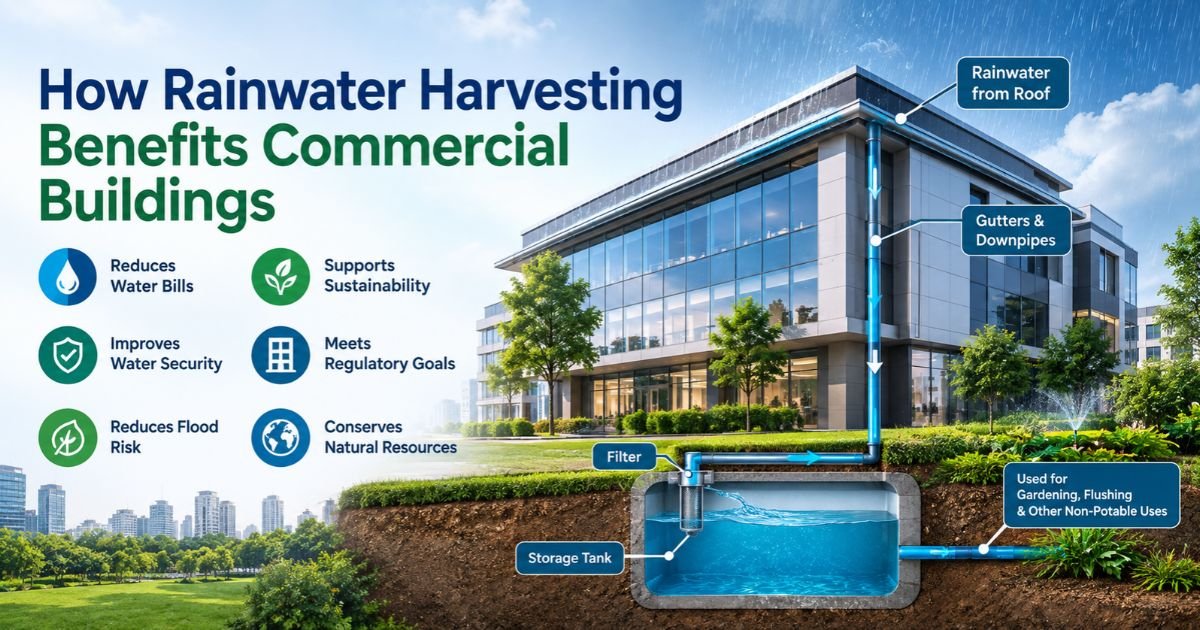
A rainwater harvesting system collects rainwater from rooftops and other suitable surfaces through pipes and drainage channels. The collected water usually passes through filters to remove leaves, dirt, and other particles before entering a storage tank or recharge structure. Depending on the building’s requirements, harvested rainwater can be used for landscaping, cleaning, flushing, and groundwater recharge after suitable treatment.
3. Key Benefits for Businesses
Installing rainwater harvesting solutions can provide several benefits to commercial property owners. It can reduce freshwater consumption, lower water-related operating costs, and help manage rainwater runoff around the building. For large offices, hotels, hospitals, malls, factories, and other commercial properties, water conservation can become an important part of their environmental management strategy while supporting sustainable building practices.
4. Planning and Maintenance of the System
A successful commercial rainwater harvesting system requires proper planning based on the building size, rooftop area, local rainfall, water demand, and available space. Regular cleaning of rooftops, gutters, filters, pipes, and storage tanks is also important for maintaining system efficiency. Working with an experienced environmental consultant can help businesses assess their requirements and develop a suitable rainwater management solution.