
Understand Where Your Waste Comes From
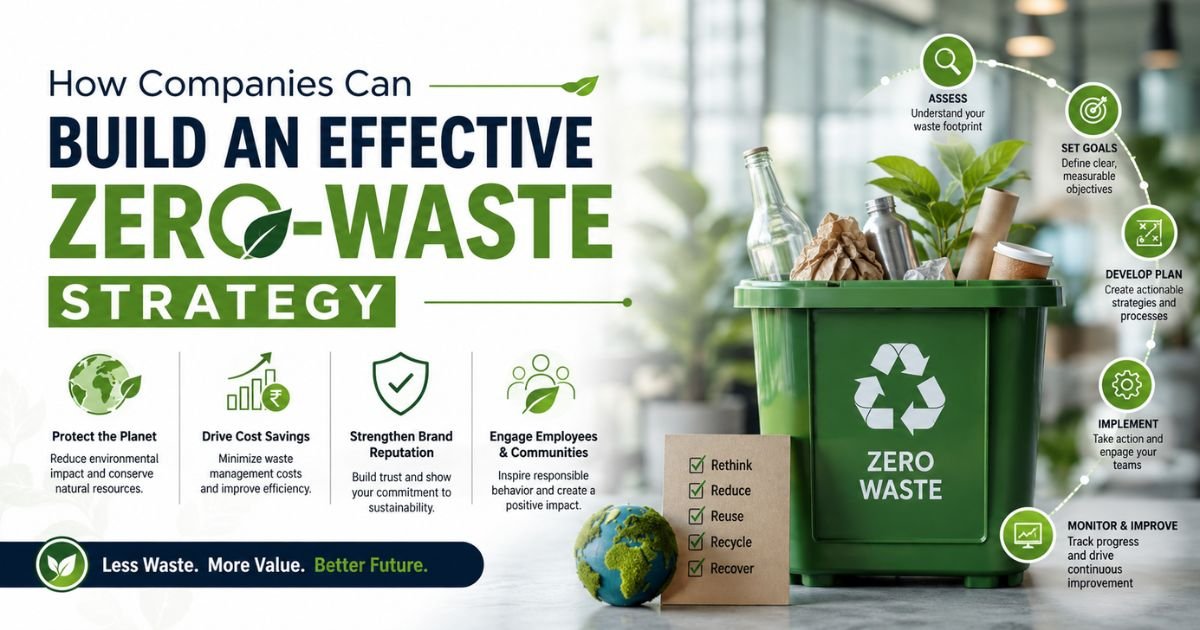
Building a zero-waste strategy starts with understanding how much waste a company produces and where it comes from. Businesses should review their daily operations and identify common waste such as paper, plastic, packaging, food waste, electronic waste, and industrial waste. A proper waste audit can help companies find areas where waste can be reduced. This simple step gives businesses a clear idea of what changes are needed to improve sustainable waste management.
Reduce Waste Before Sending It for Recycling
Recycling is important, but the first goal should be to reduce unnecessary waste. Companies can use digital documents instead of paper, choose reusable materials, reduce excess packaging, and purchase products more carefully. Better waste reduction practices can also help lower operating costs. Businesses can create separate systems for waste segregation, making it easier to manage recyclable, organic, electronic, and other types of waste responsibly.
Train Employees and Build Better Habits
A zero-waste program works better when employees are involved in the process. Companies can provide simple training on waste management, recycling, waste segregation, and responsible disposal. Clearly marked bins and easy-to-follow workplace guidelines can encourage employees to follow sustainable practices every day. Regular awareness programs can also create a stronger environmentally responsible workplace where waste reduction becomes part of normal business operations.
Track Results and Improve the Strategy
A successful zero-waste business strategy should be reviewed regularly. Companies can track the amount of waste generated, recycled, reused, and sent for disposal each month. These results can help businesses understand what is working and where more improvement is required. Working with professional environmental services and waste management providers can also help companies improve compliance, sustainability, and resource efficiency. With regular monitoring, businesses can move closer to their long-term zero-waste goals.