
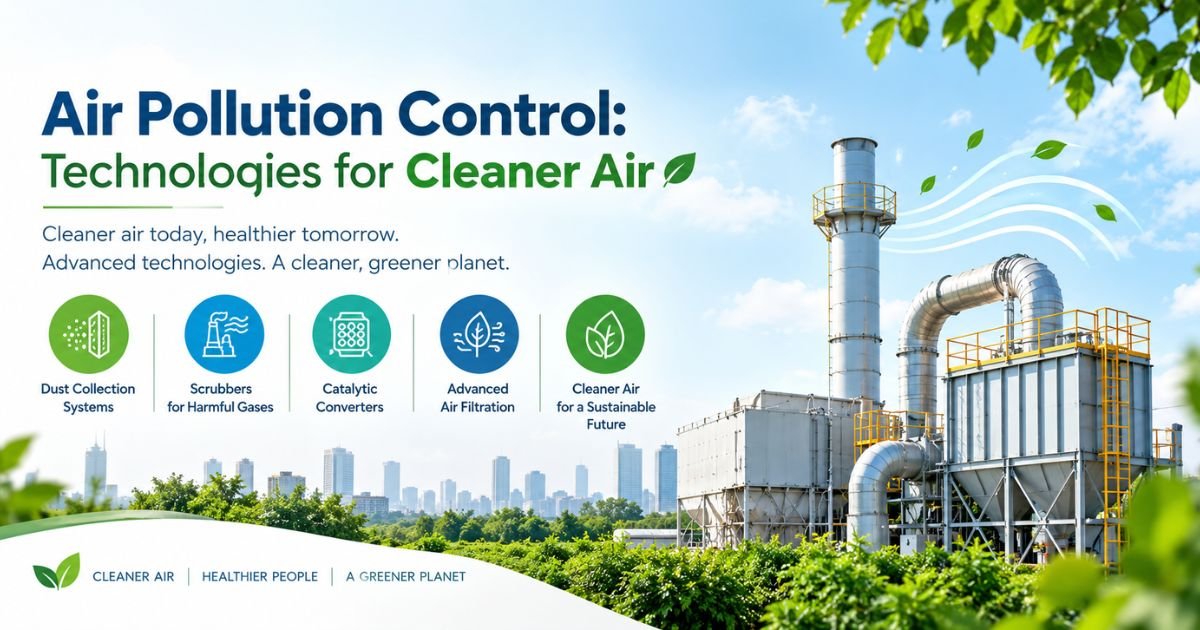
1. Why Air Pollution Control Matters
Air pollution can affect human health, nature, and the overall environment. Air pollution control helps reduce harmful gases, smoke, dust, and other pollutants released into the atmosphere. Industries, factories, construction sites, and commercial facilities can use proper air quality management practices to reduce their environmental impact and support cleaner surroundings.
2. Technologies Used to Control Air Pollution
Different industries need different air pollution control systems depending on the type of emissions they produce. Technologies such as bag filters, electrostatic precipitators (ESP), wet scrubbers, dust collectors, and gas cleaning systems are commonly used to capture or remove pollutants before they enter the atmosphere. Selecting the right technology can improve emission control and operational efficiency.
3. Controlling Industrial Emissions
Industrial processes can produce dust, fumes, smoke, and harmful gases. Industrial emission control systems are designed to manage these pollutants at their source. Regular inspection, maintenance, and emission monitoring can help industries maintain better air quality and meet applicable environmental requirements while keeping their operations more sustainable.
4. Moving Towards Cleaner Air
Effective air pollution control is not only about installing equipment; it also requires continuous monitoring and responsible environmental management. Businesses can combine dust control, emission reduction, air quality monitoring, and sustainable environmental solutions to reduce pollution over time. Cleaner production practices can help create healthier workplaces and a better environment.