
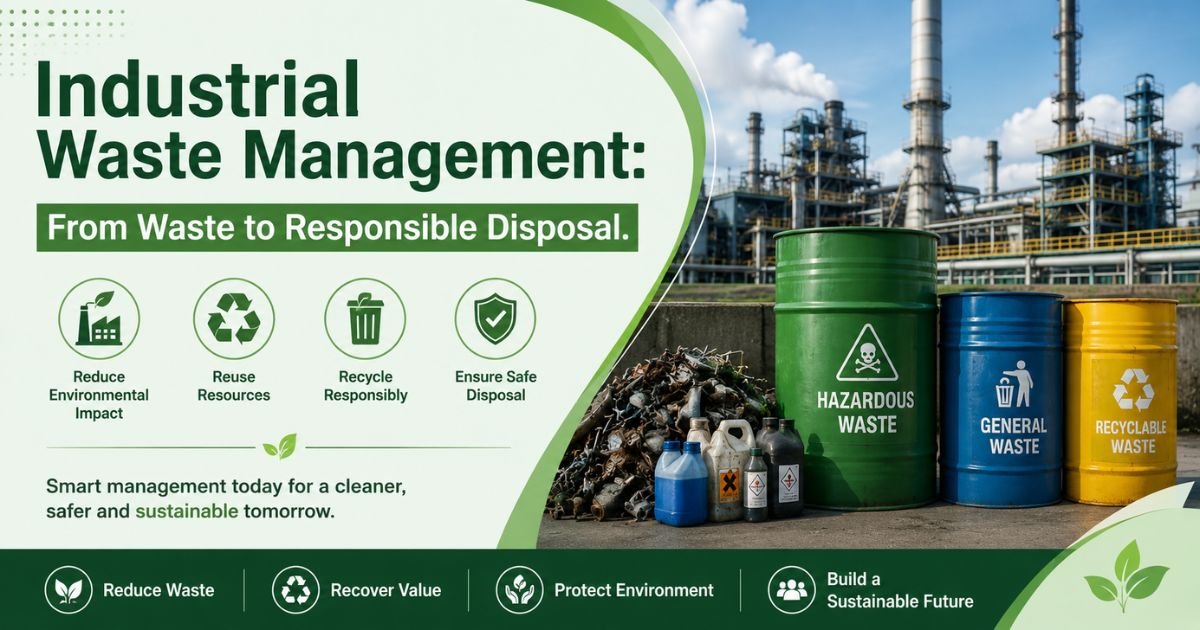
1. Understanding Industrial Waste
Industrial waste is produced by factories, manufacturing units, construction activities, and other businesses. Proper industrial waste management helps companies handle waste safely and reduce its impact on people and the environment. Waste can include chemicals, plastics, metals, sludge, packaging materials, and other unwanted materials.
2. Safe Collection and Segregation
The first step in effective waste management is proper collection and segregation. Different types of waste should be separated at the source so that recyclable, hazardous, and general waste can be handled correctly. Proper waste segregation also reduces the risk of contamination and makes recycling easier.
3. Treatment, Recycling and Recovery
Industrial waste should be treated according to its nature before final disposal. Waste recycling can help recover useful materials such as metals, plastics, paper, and other resources. Hazardous waste may require special treatment to reduce harmful substances and ensure safe handling while supporting sustainable waste management.
4. Responsible Disposal and Compliance
Waste that cannot be reused or recycled must be sent for safe and approved disposal. Proper hazardous waste management is especially important because incorrect disposal can cause soil, water, and air pollution. Following environmental compliance requirements helps industries protect the environment, improve workplace safety, and build a more sustainable operation.