
1. What Are Air Pollution Control Systems?
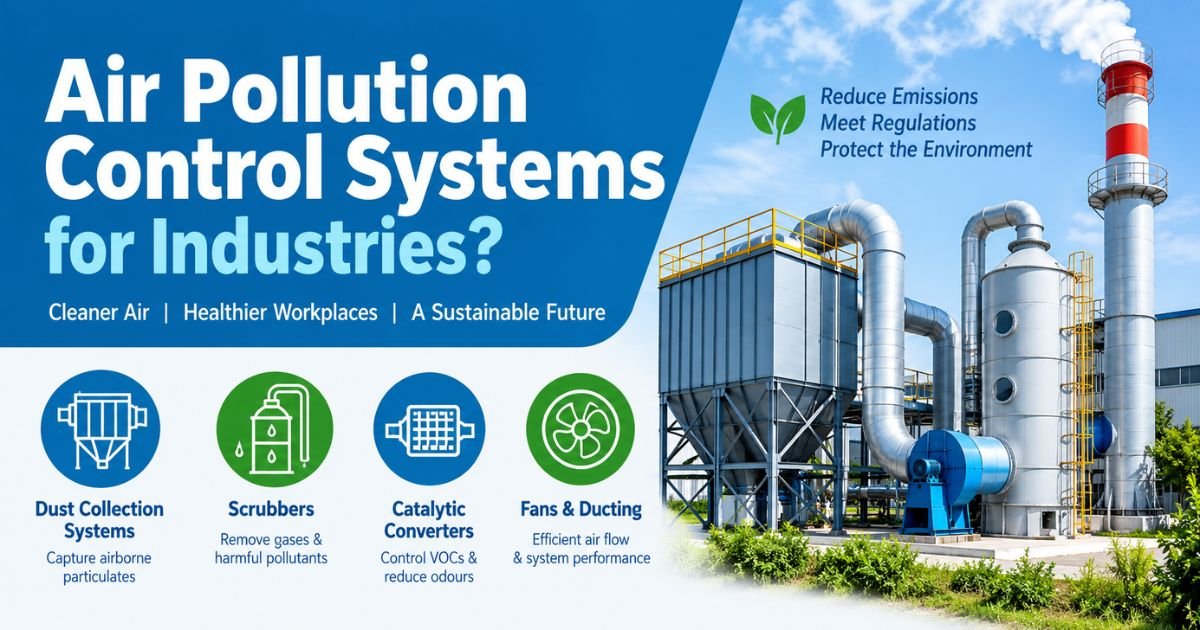
Air pollution control systems are used by industries to reduce harmful gases, dust, smoke, and other pollutants released into the atmosphere. Manufacturing plants, power plants, chemical industries, and other industrial facilities use these systems to improve air quality and control industrial air pollution. They help businesses reduce emissions and follow environmental requirements.
2. How Do These Systems Work?
Different industries need different air pollution control equipment depending on the type of pollutants they produce. Systems such as dust collectors, scrubbers, bag filters, electrostatic precipitators, and gas treatment units can capture or remove harmful particles and gases. The treated air is then released with lower levels of pollutants, helping create a cleaner and safer environment.
3. Why Are They Important for Industries?
Industrial emissions can affect air quality, workers, nearby communities, and the environment. Installing an effective emission control system can help reduce particulate matter, chemical gases, and other harmful substances. It can also support environmental compliance, improve workplace conditions, and help industries operate in a more responsible and sustainable way.
4. Choosing the Right Pollution Control Solution
The right system depends on factors such as the type of industry, production process, pollutant level, gas composition, and required emission limits. Companies should work with experienced environmental services providers to select, install, and maintain suitable equipment. Regular monitoring and maintenance are also important for keeping the air pollution control system efficient over the long term.