
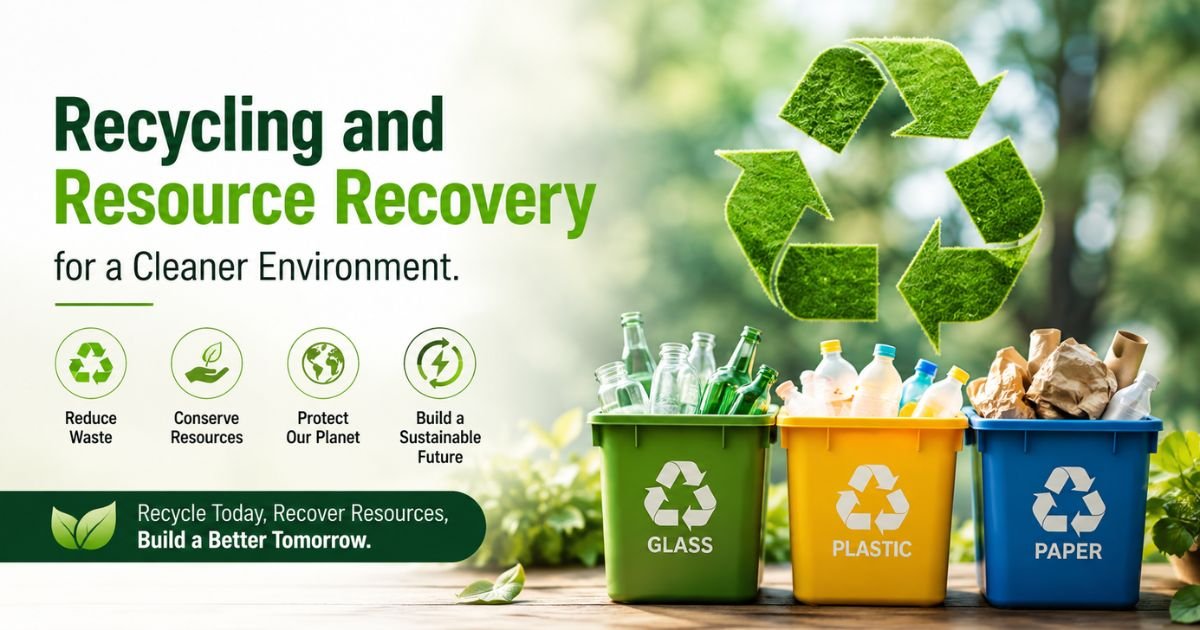
1. Understanding Recycling and Resource Recovery
Recycling and Resource Recovery are important parts of modern waste management. Recycling means collecting and processing waste materials such as paper, plastic, glass, and metal so they can be used again. Resource recovery goes one step further by recovering useful materials or energy from waste. These practices help reduce the amount of waste sent to landfills and support a cleaner environment.
2. Importance of Recycling
Effective recycling services help businesses, industries, and communities manage waste in a responsible way. Proper waste segregation makes it easier to identify recyclable materials and send them for processing. Recycling and waste management can also reduce the demand for new raw materials, save energy, and lower the environmental impact of daily activities.
3. Resource Recovery from Waste
Resource recovery focuses on finding value in materials that would otherwise become waste. Depending on the type of waste, useful materials can be recovered through sorting, processing, reuse, composting, or energy recovery. Sustainable waste management solutions help organizations use resources more efficiently while reducing waste generation and supporting environmental protection.
4. Building a Sustainable Future
Businesses can improve their environmental performance by adopting reliable recycling and resource recovery practices. Regular waste audits, proper segregation, responsible disposal, and recycling programs can improve overall waste management. By recovering valuable resources and reducing landfill waste, organizations can move toward more sustainable operations and contribute to a cleaner and healthier future