
Indian Cities Move Toward a Zero-Waste Future
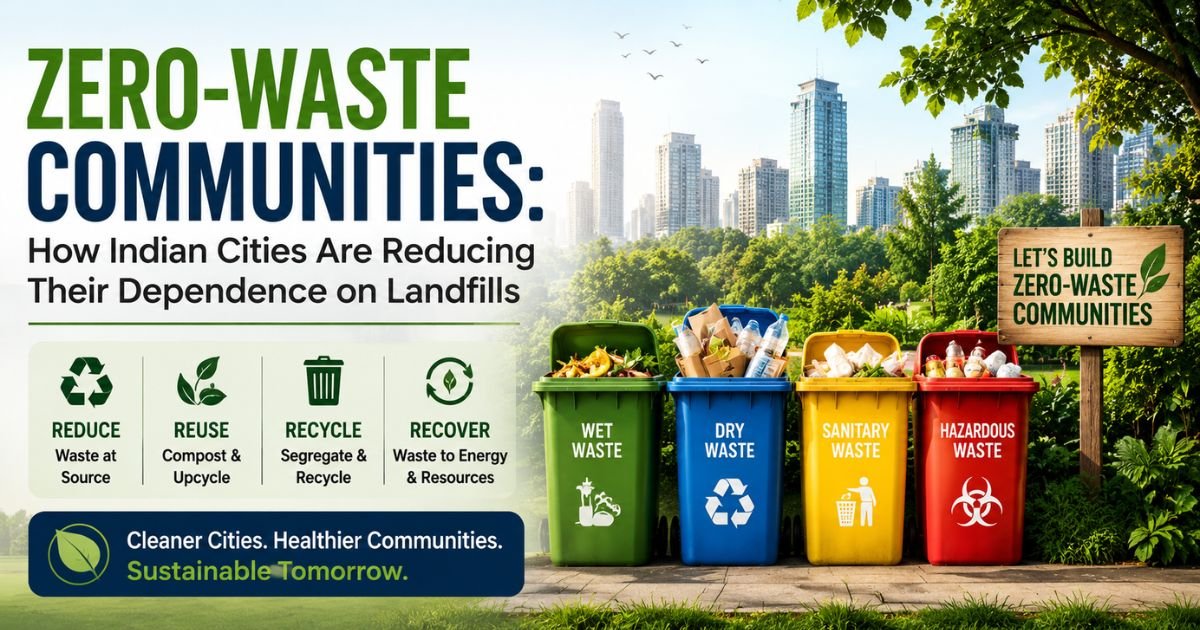
Indian cities are increasingly shifting from traditional dumping toward zero-waste management, source segregation and scientific waste processing. Under the Solid Waste Management Rules 2026, waste segregation, circular economy practices and better processing systems have received stronger emphasis. The larger goal is to reduce the amount of municipal solid waste reaching landfills and turn waste into reusable resources.
Recycling and Waste Segregation Become the New Priority
A major part of the waste management transformation is separating wet, dry, sanitary and special-care waste at the source. This makes recycling, composting, material recovery and waste-to-energy more effective while reducing unnecessary landfill disposal. Cities are also expanding Material Recovery Facilities and decentralised processing infrastructure to handle waste closer to where it is generated.
Cities Are Turning Old Dumpsites Into Valuable Land
India’s landfill remediation efforts are also changing the way cities deal with legacy waste. Through biomining and scientific processing, old garbage mountains are being cleared and valuable urban land is being reclaimed. Nagpur’s Bhandewadi, for example, has processed more than 10 lakh metric tonnes of legacy waste and reclaimed around 55 acres, supporting a transition toward sustainable waste management and resource recovery.
Community Participation Is Key to Zero-Waste Cities
Technology alone cannot create a zero-waste city; citizens, municipalities, waste workers and local businesses all have to participate. Madanapalle in Andhra Pradesh is one example where source segregation, composting, recycling, upcycling and biomining are being combined with community participation. Such models show how circular economy, environmental services and sustainable cities can work together to reduce landfill dependence and create cleaner urban spaces