
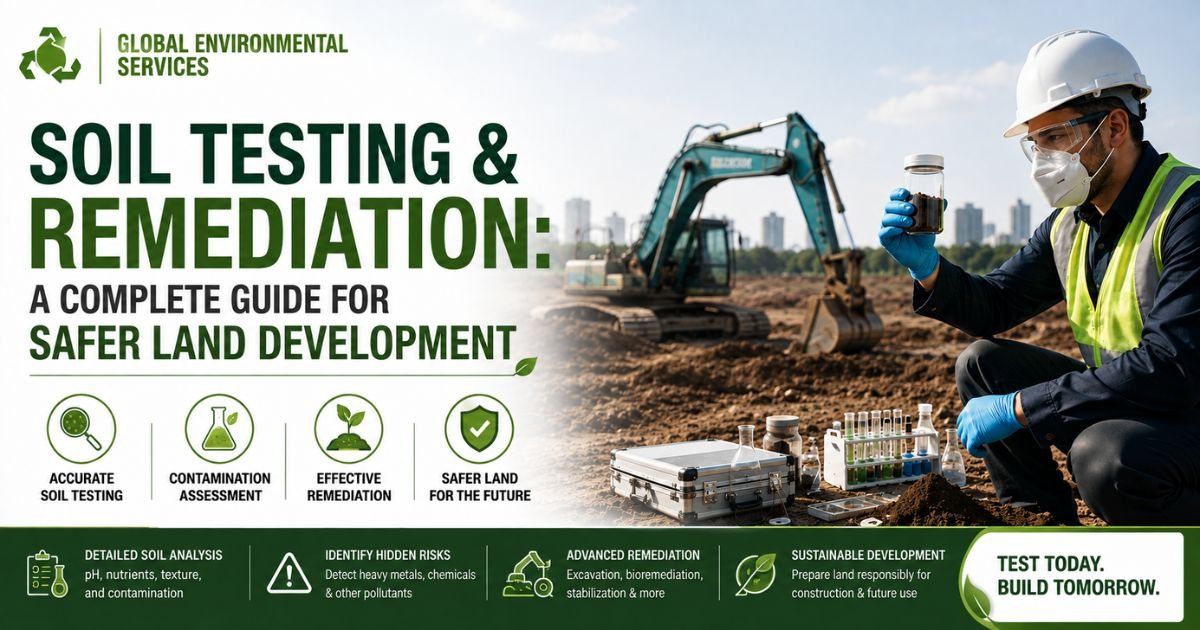
1. Understanding Soil Conditions
Soil testing is an important step before construction, agriculture, or land development because it helps determine the physical and chemical condition of the ground. Professional soil analysis can identify factors such as pH levels, moisture, nutrients, texture, and possible contamination, helping property owners and developers make informed decisions.
2. Detecting Soil Contamination
Proper testing can reveal the presence of soil contaminants such as heavy metals, petroleum residues, chemicals, or other harmful substances. Identifying these issues at an early stage is essential for environmental assessment, land-use planning, and protecting surrounding groundwater and ecosystems from potential pollution.
3. Effective Soil Remediation
When contamination is detected, soil remediation involves treating, removing, or containing the affected soil to reduce environmental risks. Depending on the site conditions, solutions may include excavation, soil washing, bioremediation, stabilization, or other contaminated land remediation techniques designed to restore the site safely.
4. Preparing Land for Future Development
A combination of detailed soil testing and remediation can help prepare contaminated or unsuitable land for responsible future use. For land development, construction projects, and environmental compliance, reliable soil investigation provides valuable information while supporting safer construction practices and sustainable site management.