
How Vilayati Babul Reached India
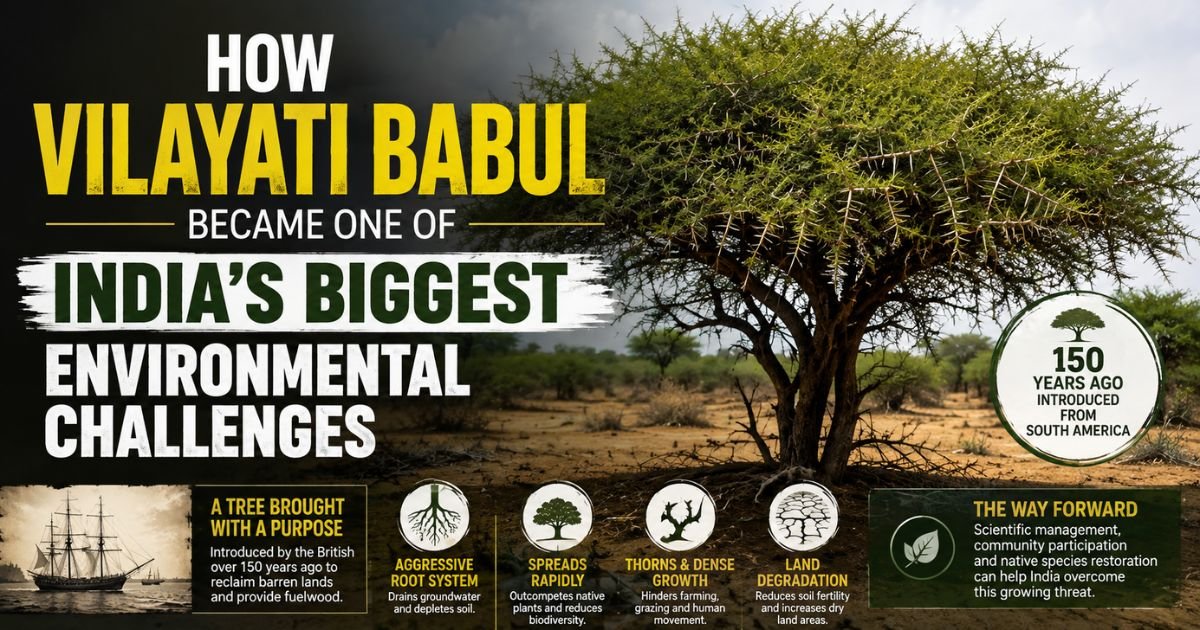
More than 150 years ago, Vilayati Babul (Prosopis juliflora) was introduced from the Americas to help reclaim dry and barren land. Initially viewed as a practical solution for fuelwood and erosion control, the fast-growing tree spread rapidly across several Indian states. Over time, its aggressive growth turned it into an invasive species that is now difficult to control.
Keywords: Vilayati Babul, Prosopis juliflora, invasive tree in India, South American tree, environmental conservation
Why the Tree Has Become an Environmental Challenge
Vilayati Babul grows quickly and forms dense forests that prevent native plants from receiving sunlight, water, and nutrients. Its deep root system consumes large amounts of groundwater, while its thorny branches make farmland and grazing areas difficult to access. As a result, biodiversity declines and local ecosystems become increasingly vulnerable.
Keywords: invasive species, biodiversity loss, groundwater depletion, environmental issues India, ecosystem restoration
Impact on Farmers and Wildlife
The uncontrolled spread of Vilayati Babul has affected agriculture, livestock, and wildlife habitats. Farmers often struggle to clear their fields, while native grasses disappear, reducing food availability for grazing animals. Many experts believe managing invasive species like this is essential for restoring ecological balance and protecting rural livelihoods.
Keywords: agriculture in India, wildlife conservation, land degradation, farming challenges, ecological balance
Can India Control the Spread of Vilayati Babul?
Several states have launched efforts to remove Vilayati Babul and replace it with native tree species that better support biodiversity. While complete eradication is difficult, scientific management, afforestation, and community participation can help reduce its impact. Long-term conservation strategies will play a crucial role in protecting India’s natural landscapes.
Keywords: afforestation, native tree species, forest restoration, invasive plant management, sustainable environment