
Air Pollution: A Growing Threat to Public Health
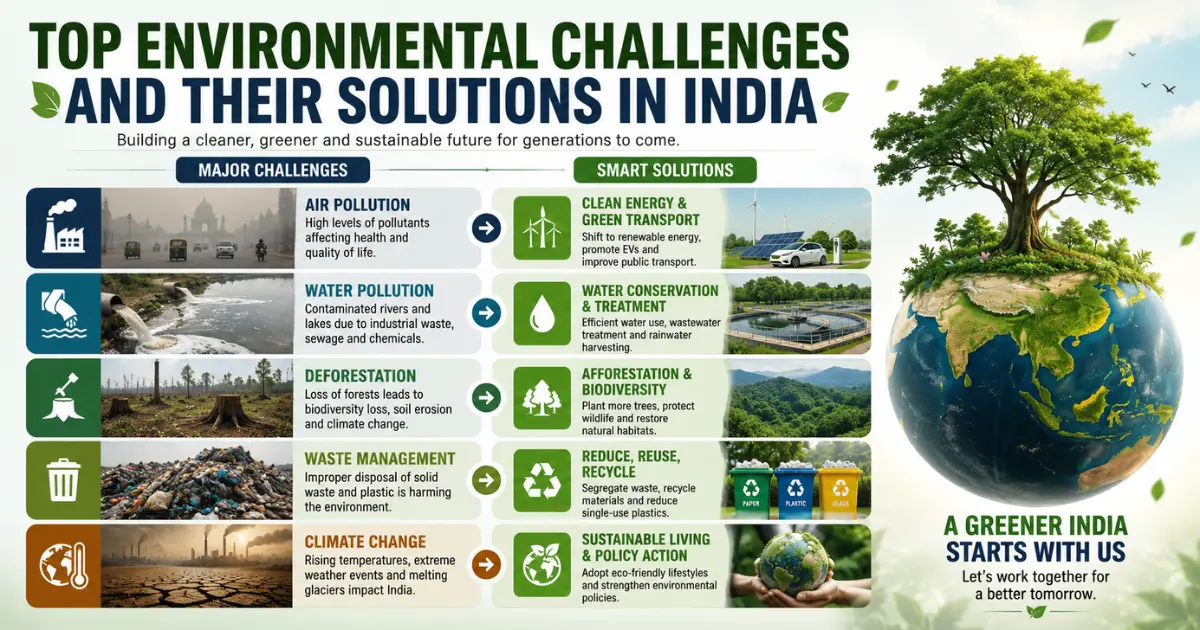
Air pollution remains one of the most serious environmental challenges in India, affecting millions of people every year. Rapid urbanization, industrial emissions, vehicle exhaust, and construction activities contribute significantly to poor air quality in major cities. High levels of particulate matter not only impact public health but also reduce productivity and increase healthcare costs. Strengthening air pollution control, promoting clean energy adoption, and encouraging sustainable transportation can help improve air quality and create healthier communities.
Waste Management: The Need for Sustainable Practices
Increasing population and economic growth have led to a sharp rise in municipal and industrial waste generation. Improper disposal of solid waste, plastic waste, and hazardous materials causes soil contamination, water pollution, and environmental degradation. Effective waste management solutions, recycling programs, waste segregation, and circular economy practices can significantly reduce environmental impact. Businesses and local authorities must work together to develop sustainable waste management systems that support long-term environmental sustainability.
Water Scarcity and Water Pollution Challenges
Water scarcity and water pollution continue to pose major risks across many regions of India. Industrial discharge, untreated sewage, and excessive groundwater extraction have placed immense pressure on water resources. Access to clean water is becoming increasingly difficult in both urban and rural areas. Implementing water conservation strategies, wastewater treatment systems, rainwater harvesting, and responsible water usage can help protect valuable water resources and ensure sustainable development for future generations.
Climate Change and the Path Toward Sustainability
The effects of climate change in India are becoming more visible through extreme weather events, rising temperatures, floods, droughts, and changing rainfall patterns. These environmental challenges impact agriculture, infrastructure, biodiversity, and economic growth. Investing in renewable energy, improving energy efficiency, expanding green infrastructure, and supporting climate-resilient policies can help reduce environmental risks. A collective commitment from governments, businesses, and citizens is essential for building a greener and more sustainable future.