
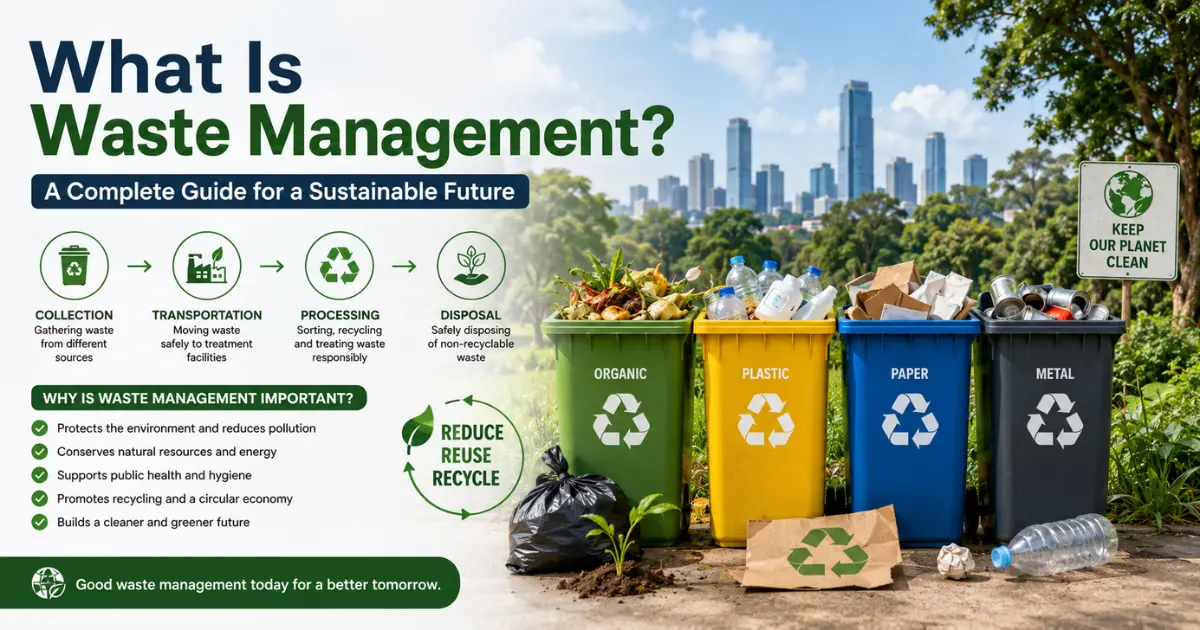
What Is Waste Management? A Complete Guide
Waste is generated every day by households, businesses, industries, hospitals, and construction sites. As populations grow and consumption increases, managing waste responsibly has become essential for protecting public health and the environment. Effective waste management is not just about disposing of garbage—it is about reducing waste, recovering valuable resources, and promoting sustainability.
Waste management is the process of collecting, transporting, sorting, treating, recycling, and safely disposing of waste materials. Its goal is to minimize the environmental impact of waste while maximizing resource recovery. A well-organized waste management system helps reduce pollution, conserve natural resources, and create healthier communities.
Why Is Waste Management Important?
Proper waste management plays a vital role in protecting both people and the planet. When waste is not handled correctly, it can contaminate soil and water, pollute the air, and create health risks by attracting pests and spreading diseases.
Responsible waste management also supports sustainable development by encouraging recycling and the reuse of materials. Recycling paper, plastic, glass, and metal reduces the need for raw materials, saves energy, and lowers greenhouse gas emissions. These efforts contribute to a cleaner environment and help combat climate change.
Types of Waste
Waste can be classified into several categories, each requiring specific handling and disposal methods.
- Municipal Waste: Household and commercial waste such as food scraps, paper, plastic, and glass.
- Industrial Waste: Waste generated by manufacturing facilities, including chemicals, metal scraps, and production residues.
- Hazardous Waste: Materials like batteries, paints, solvents, and pesticides that require specialized disposal.
- Biomedical Waste: Medical waste produced by hospitals and clinics, including syringes, gloves, and pharmaceutical products.
- Electronic Waste (E-Waste): Discarded electronic devices such as computers, smartphones, and televisions.
Proper segregation of these waste types improves recycling efficiency and ensures safe disposal.
Common Waste Management Methods
Several methods are used to manage waste effectively, depending on its type and composition.
Recycling converts used materials into new products, reducing landfill waste and conserving natural resources.
Composting transforms organic waste, such as food scraps and garden waste, into nutrient-rich compost that improves soil quality.
Incineration involves burning waste under controlled conditions to reduce its volume, with some facilities generating energy during the process.
Sanitary landfills are designed to safely contain waste while preventing contamination of soil and groundwater. Modern landfills also capture methane gas to reduce environmental impact.
Benefits of Effective Waste Management
A strong waste management system offers numerous environmental, economic, and social benefits. It reduces pollution, conserves valuable resources, and protects ecosystems. Recycling industries create jobs and support economic growth while lowering disposal costs for businesses.
Clean surroundings also improve public health and enhance the quality of life for communities. By reducing landfill waste and promoting resource recovery, waste management contributes to a more sustainable future.
Best Practices
Everyone can contribute to better waste management by adopting simple habits. Reducing unnecessary consumption, reusing products, recycling recyclable materials, and composting organic waste are effective ways to minimize waste. Businesses should also implement waste reduction strategies, educate employees, and work with certified environmental service providers to ensure responsible waste handling.
Conclusion
Waste management is a shared responsibility that benefits individuals, businesses, and the environment. By adopting sustainable practices and supporting recycling initiatives, we can reduce pollution, conserve natural resources, and create cleaner communities. Investing in effective waste management today helps build a healthier and more sustainable future for generations to come.